

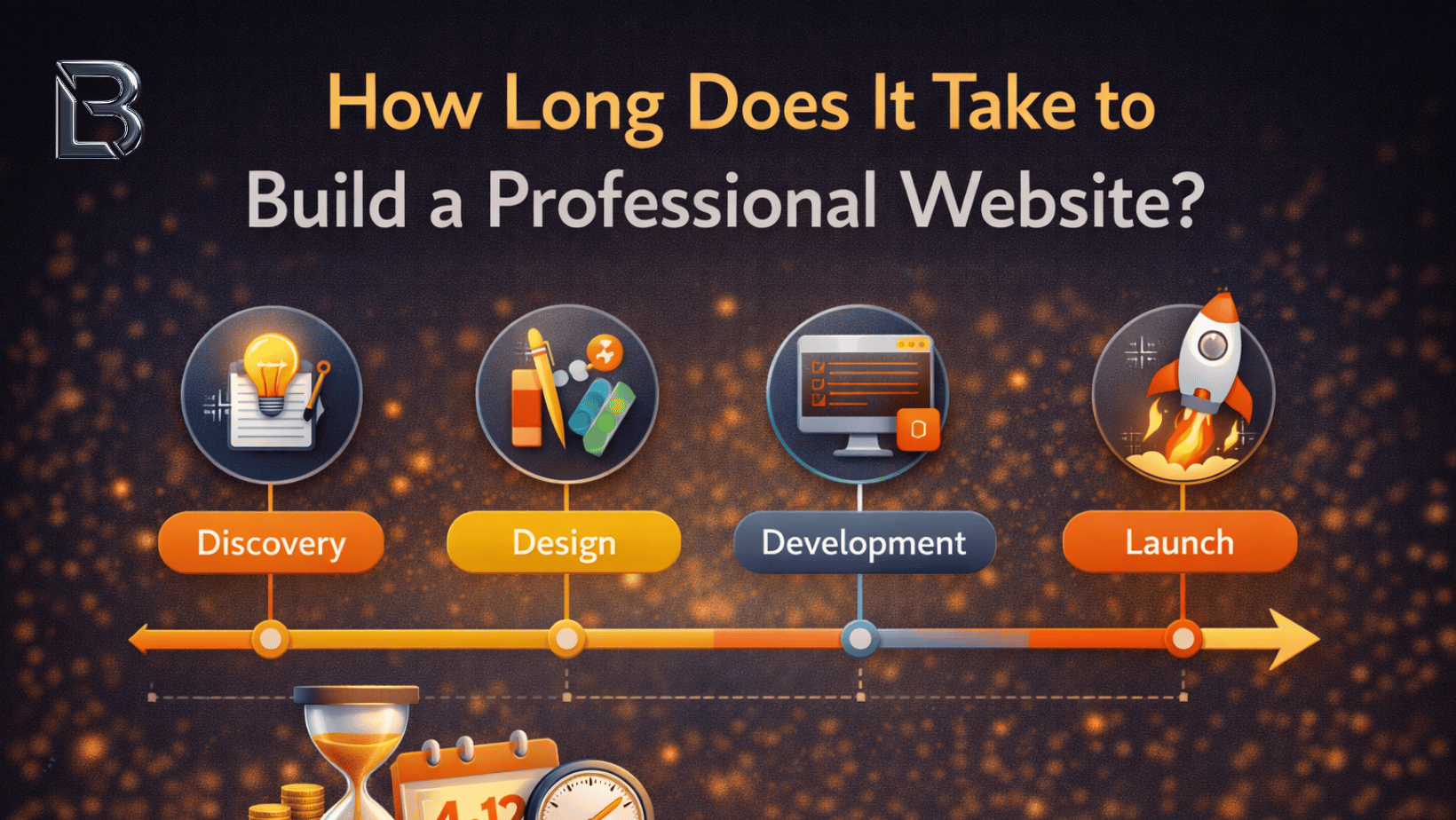
One of the most common questions businesses ask before starting a project is:
“How long does it take to build a professional website?”
The answer depends on several factors, including the size of the website, complexity, features and the development process.
Some websites can be completed in a few weeks, while others take several months.
In this guide, we’ll break down realistic timelines, explain what affects development time and help you understand what to expect when building a website.
Average Website Development Timeline
Here’s a general timeline based on project type:
| Website Type | Estimated Time |
|---|---|
| Basic website (5–10 pages) | 2–4 weeks |
| Small business website | 4–8 weeks |
| Custom professional website | 8–16 weeks |
| E-commerce website | 6–12 weeks |
| Large enterprise website | 3–6 months+ |
These timelines vary depending on the scope and complexity of the project.
Key Phases of Website Development
A professional website is built in stages. Each stage plays a role in the overall timeline.
1. Discovery and Planning (1–2 weeks)
This is the foundation of the project.
During this phase:
- business goals are defined
- target audience is identified
- features and functionality are planned
- sitemap is created
Good planning helps avoid delays later in the project.
2. Design (2–4 weeks)
Designers create the look and feel of the website.
This includes:
- wireframes
- UI/UX design
- branding elements
- responsive layouts
A well-designed website improves user experience and conversions.
3. Development (3–8 weeks)
Developers turn designs into a functional website.
This stage includes:
- frontend development
- backend systems
- integrations
- CMS setup
The more complex the website, the longer this phase will take.
4. Content Creation (1–3 weeks)
Content is often underestimated, but it plays a critical role.
This includes:
- writing website copy
- creating visuals
- optimizing for SEO
High-quality content improves both user engagement and search rankings.
5. Testing and Launch (1–2 weeks)
Before going live, the website is tested to ensure everything works properly.
Testing includes:
- performance testing
- mobile responsiveness
- browser compatibility
- bug fixes
Once approved, the website is launched.
What Affects Website Development Time?
Several factors can increase or decrease the timeline.
1. Website Complexity
Simple websites with a few pages can be built quickly.
Complex websites with:
- user accounts
- dashboards
- integrations
- automation systems
require more time.
2. Number of Pages
More pages = more design, content, and development work.
A 5-page website is much faster than a 50-page website.
3. Custom Features
Custom functionality adds development time.
Examples include:
- booking systems
- payment gateways
- CRM integrations
- custom dashboards
4. Client Feedback Speed
Delays often happen when feedback takes too long.
Quick approvals help keep the project on schedule.
5. Content Readiness
If content is not ready, development may slow down.
Businesses that prepare content early often launch faster.
Template vs Custom Website Timeline
The type of website also affects how long it takes.
| Type | Timeline |
| Template website | 1–3 weeks |
| Custom website | 6–16 weeks |
Template websites are faster because they use pre-built designs.
Custom websites take longer but offer more flexibility and scalability.
How to Speed Up Website Development
If you want to launch faster, follow these tips:
- prepare your content early
- define clear project goals
- provide quick feedback
- avoid frequent design changes
- choose an experienced development team
Working with professionals can significantly reduce delays.
When Should You Expect Delays?
Website projects may take longer if:
- requirements change frequently
- new features are added mid-project
- communication is slow
- integrations are complex
Planning properly helps avoid these issues.
Final Thoughts
So, how long does it take to build a professional website?
While most business websites take 4 to 12 weeks to complete, LB Digital Solutions delivers results up to twice as fast, thanks to our optimized workflows and experienced development team.
Simple websites can be launched quickly, while custom platforms require more time to ensure quality and performance.
The key is not just speed, but building a website that supports your business goals and delivers long-term value.
If you’re planning a website project and want a clear timeline tailored to your needs, working with an experienced team can help you launch efficiently and successfully.
Ready to start your website project?
Contact our team to get a timeline and strategy tailored to your business.