

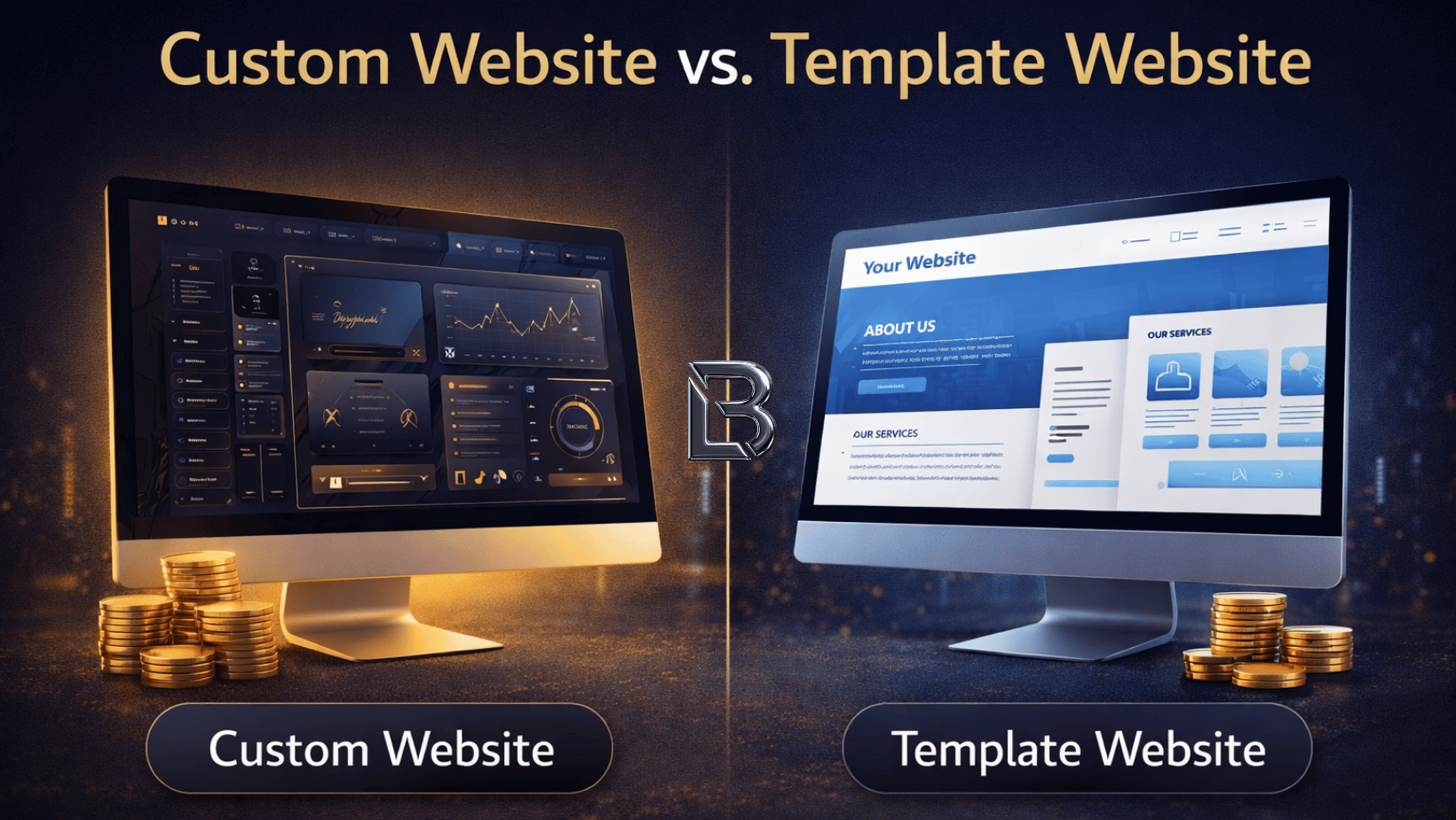
When businesses plan a new website, one of the first decisions they face is choosing between a custom website and a template-based website.
Both options can help you build an online presence. However, they differ significantly in cost, flexibility, performance and scalability.
Some businesses only need a simple website to display their services. Others require advanced functionality, integrations or custom user experiences.
In this guide, we’ll explain the key differences between custom websites and template websites, their pros and cons and how to choose the right option for your business.
What Is a Template Website?
A template website uses a pre-designed layout that can be customized with your brand colors, images and content.
Popular platforms offering templates include:
These platforms provide ready-made website designs that allow businesses to launch quickly without building a site from scratch.
According to research from the W3Techs, WordPress alone powers over 40% of websites on the internet, largely because of its template ecosystem.
Advantages of Template Websites
Template websites are popular for several reasons.
Lower cost
Template websites are usually cheaper because much of the design and development work is already completed.
Faster launch
A template-based website can often be launched within days or weeks.
Ease of use
Many template platforms offer drag-and-drop builders, making it easier for non-technical users to manage their websites.
Limitations of Template Websites
Despite their advantages, template websites also have some drawbacks.
Limited customization
Templates follow a fixed design structure. While some elements can be customized, major layout changes can be difficult.
Performance limitations
Many templates include extra features and scripts that may slow down website performance.
Research from Google shows that page speed and user experience are important ranking factors for search engines.
Scalability issues
As businesses grow, template websites may struggle to support advanced functionality such as custom dashboards or integrations.
What Is a Custom Website?
A custom website is built from the ground up based on your business requirements.
Instead of adapting your business to fit a template, a custom website is designed to match your workflows, branding, and functionality needs.
This approach involves:
- custom UI/UX design
- tailored backend development
- optimized performance
- custom integrations
Businesses often choose custom development when they need unique features or advanced digital platforms.
Benefits of Custom Websites
Custom websites offer several advantages.
Unlimited design flexibility
Designers can create a completely unique interface that reflects your brand identity.
Better performance
Custom websites are typically optimized for performance because they only include the features required for your business.
Performance is important because, according to Google, faster websites improve both user experience and search rankings.
Scalability
Custom websites are easier to scale as your company grows.
New features, integrations, and modules can be added without being limited by template restrictions.
Key Differences Between Custom and Template Websites
Below is a simple comparison.
| Feature | Template Website | Custom Website |
|---|---|---|
| Cost | Lower | Higher |
| Development time | Faster | Longer |
| Design flexibility | Limited | Unlimited |
| Performance | Moderate | Optimized |
| Scalability | Limited | Highly scalable |
| Unique branding | Limited | Fully customizable |
Both options have their place depending on your business goals.
When a Template Website Makes Sense
Template websites work well for:
- startups with small budgets
- simple business websites
- personal websites or portfolios
- small service businesses
If your website only needs basic pages like:
- home
- about
- services
- contact
a template website may be sufficient.
When a Custom Website Is the Better Choice
Custom development is usually the better option when:
- your website requires custom functionality
- you need advanced integrations
- your business is scaling rapidly
- you want a unique user experience
- your website plays a key role in generating revenue
Many growing companies eventually transition from template websites to custom platforms as their digital needs expand.
Which Option Is Right for Your Business?
Choosing between a custom website and a template website depends on your goals, budget, and long-term growth plans.
If you need a fast and affordable solution, templates may be the right choice.
However, if your website is a critical part of your business strategy, investing in custom development can provide better performance, flexibility, and scalability.
Businesses that rely heavily on their websites for lead generation, automation or digital services often benefit more from custom solutions.
Final Thoughts
Both template websites and custom websites can help businesses establish an online presence. The key difference lies in how much control and scalability your business needs.
Template websites are affordable and quick to launch. Custom websites provide flexibility, performance and long-term growth potential.
The best choice depends on your business goals and how important your website is to your overall digital strategy.
If you’re planning a new website and want to explore the best option for your business, working with an experienced development team can help you choose the right approach.
Book free consultation, our team team will help you to choose the right method for you based on your business requirements.