

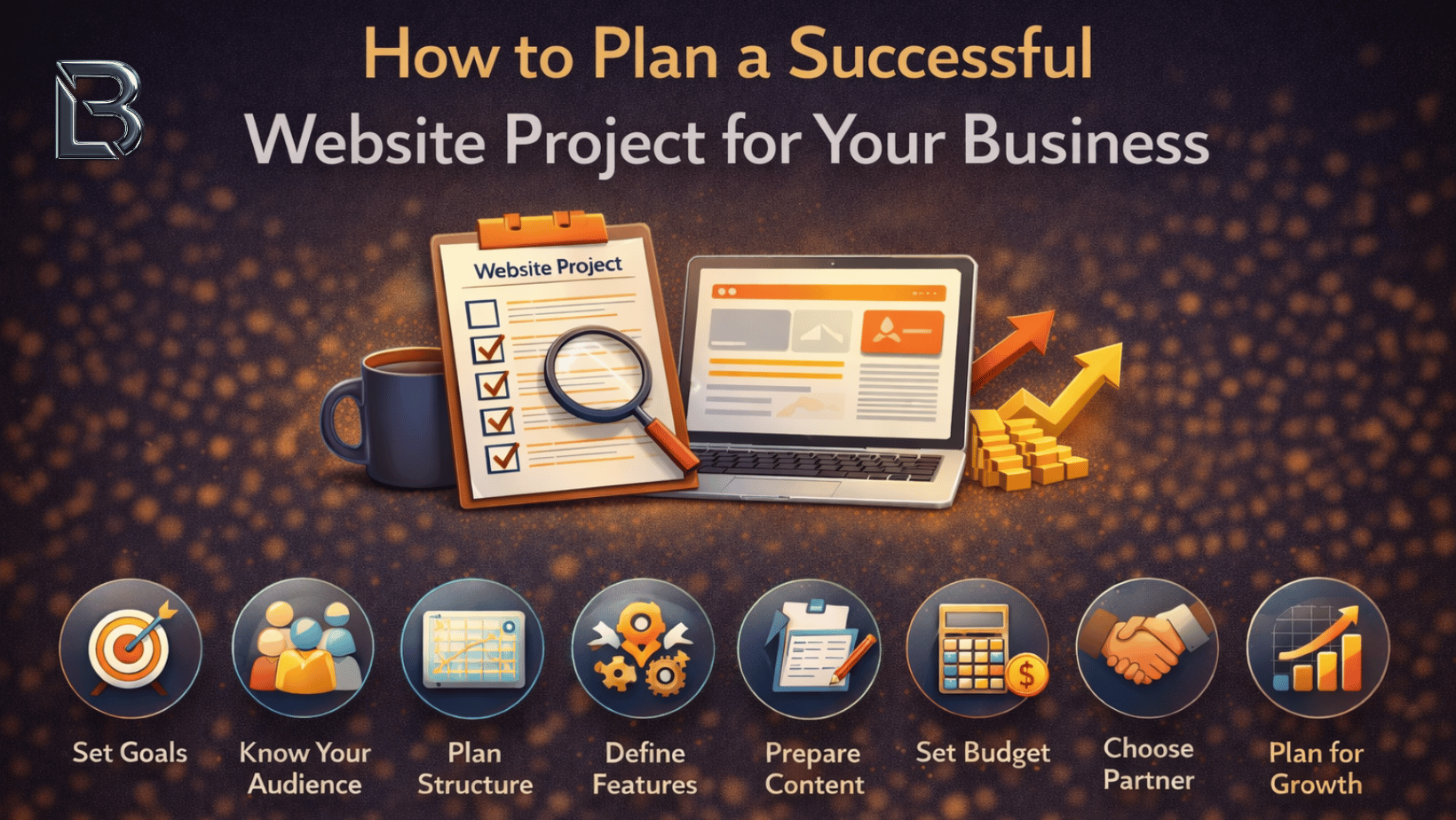
Building a website is not just about design or development. The success of a website depends heavily on how well the project is planned from the beginning.
Many businesses rush into development without a clear strategy. This often leads to delays, budget overruns and poor results.
A well-planned website project ensures:
- faster development
- better performance
- higher conversions
- long-term scalability
In this guide, we’ll walk you through how to plan a successful website project step by step.
1. Define Your Website Goals
Before starting, you need to clearly understand why you are building the website.
Ask yourself:
- Do you want to generate leads?
- Sell products online?
- Build brand awareness?
- Provide information about your services?
Your goals will shape everything — from design to features.
Example goals
- generate leads through contact forms
- increase online sales
- improve brand credibility
- automate business processes
Clear goals help you avoid confusion later.
2. Identify Your Target Audience
Your website should be designed for your ideal customer, not for everyone.
Consider:
- who your customers are
- what problems they have
- what they are looking for
- how they search online
According to HubSpot, businesses that understand their audience are significantly more effective at converting visitors into customers.
3. Define Website Structure (Sitemap)
A sitemap outlines all the pages your website will include.
Typical business website structure:
- Home
- About
- Services
- Blog
- Contact
More advanced websites may include:
- case studies
- dashboards
- booking systems
A clear structure improves:
- user experience
- navigation
- SEO performance
4. Plan Your Features and Functionality
Think about what your website needs to do.
Common features include:
- contact forms
- booking systems
- payment gateways
- CRM integrations
- user dashboards
Avoid adding unnecessary features. Focus on what supports your business goals.
5. Prepare Your Content Early
Content is often the biggest cause of delays.
Your website content includes:
- headlines
- service descriptions
- images
- call-to-actions
High-quality content improves both SEO and conversions.
Pro tip
Write content before development begins. This speeds up the entire project.
6. Choose the Right Technology
The technology you choose affects performance, scalability, and maintenance.
Options include:
- WordPress (flexible and popular)
- Webflow (design-focused)
- Custom development (fully scalable)
Each option has advantages depending on your project needs.
7. Set a Realistic Budget
Website costs vary depending on complexity.
Your budget should consider:
- design
- development
- content creation
- SEO
- maintenance
Avoid choosing the cheapest option. Focus on value and long-term results.
8. Create a Project Timeline
A clear timeline keeps the project on track.
Typical stages include:
- planning
- design
- development
- testing
- launch
Most business websites take 4–12 weeks, depending on complexity.
Working with an experienced team can significantly improve efficiency and delivery speed.
9. Choose the Right Development Partner
The success of your project depends on the team you work with.
Look for:
- proven experience
- strong portfolio
- clear communication
- structured process
A good development partner will guide you through the entire process.
10. Plan for SEO from Day One
SEO should not be an afterthought.
It should be included from the beginning.
Key SEO elements:
- keyword research
- optimized page structure
- fast loading speed
- mobile optimization
- internal linking
According to BrightEdge, organic search drives a significant portion of website traffic.
Planning SEO early helps your website rank faster.
11. Test Before Launch
Before launching your website, test everything.
Check:
- mobile responsiveness
- loading speed
- forms and functionality
- browser compatibility
Testing ensures a smooth launch and avoids issues later.
12. Plan for Growth
Your website should grow with your business.
Think long-term:
- can you add new features later?
- can the website handle more traffic?
- is it scalable?
A well-built website is an investment that supports future growth.
Final Thoughts
A successful website project starts with proper planning.
Businesses that take the time to define goals, understand their audience and plan their structure achieve better results.
Without planning, even the best design or development work may fail to deliver value.
By following these steps, you can build a website that is not only visually appealing but also strategic, scalable and results-driven.
If you’re planning a website and want expert guidance, working with a professional team can help you avoid costly mistakes and launch with confidence.
Ready to plan your website the right way?
Contact our team to start your project with a clear strategy and expert support.