

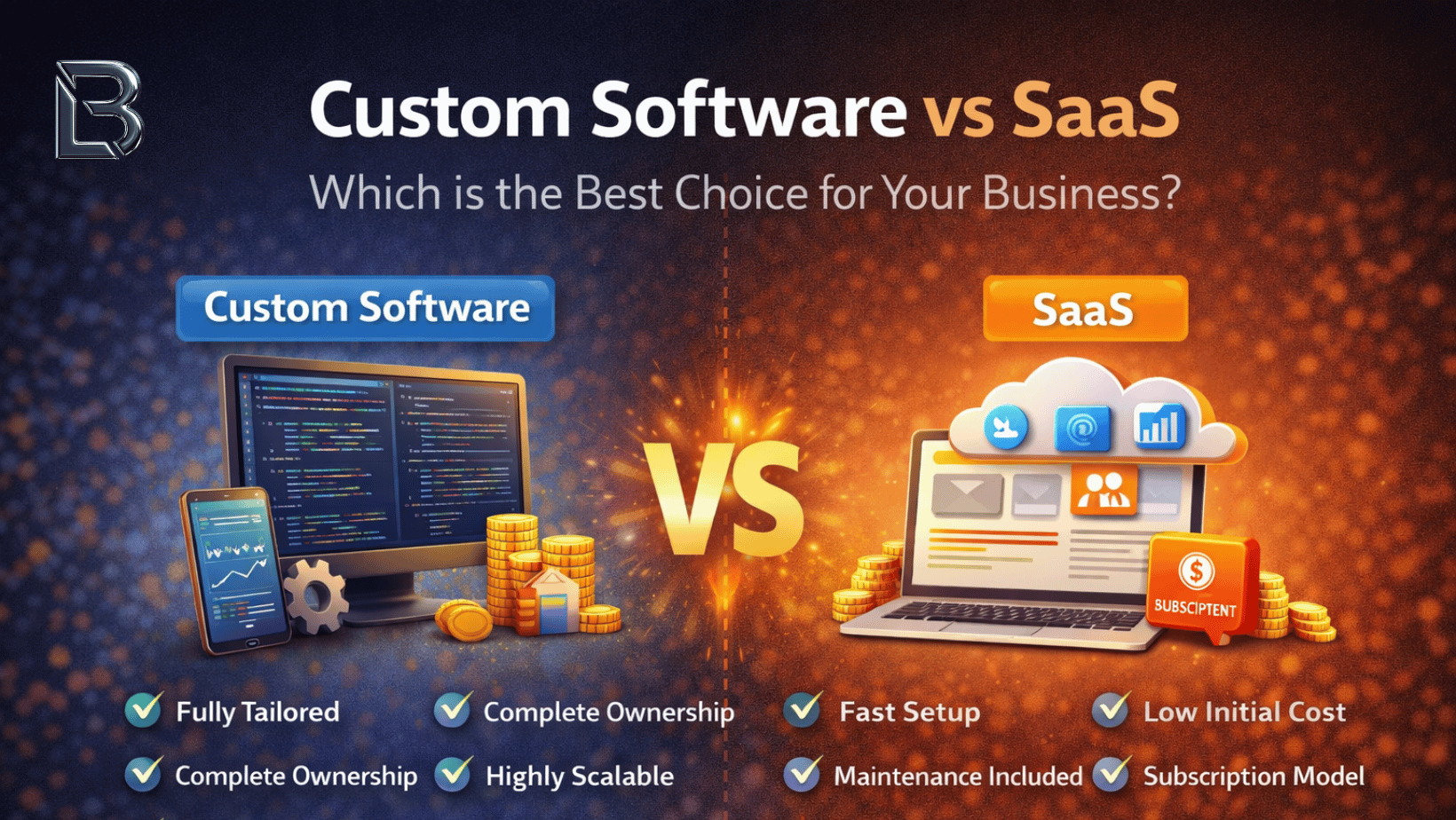
When businesses look for digital solutions, one of the biggest decisions they face is:
Should we use SaaS or invest in custom software?
Both options can help streamline operations, improve efficiency, and support growth. However, they differ significantly in cost, flexibility, scalability and long-term value.
Choosing the wrong option can lead to wasted budget, limited capabilities, and operational inefficiencies.
In this guide, we’ll break down the differences between custom software and SaaS, their advantages and how to choose the right solution for your business.
What Is SaaS (Software as a Service)?
SaaS refers to cloud-based software that users access through a subscription model.
Instead of building software, businesses use ready-made tools hosted online.
Popular SaaS examples include:
- CRM platforms
- accounting software
- project management tools
- marketing automation platforms
According to Gartner, SaaS continues to grow rapidly as businesses move toward cloud-based solutions.
What Is Custom Software?
Custom software is built specifically for a business based on its unique needs.
Instead of adapting your workflow to fit a tool, the software is designed to match your processes.
Custom solutions can include:
- internal systems
- automation platforms
- dashboards
- enterprise applications
- mobile apps
Businesses often choose custom software when off-the-shelf tools cannot meet their requirements.
Key Differences Between SaaS and Custom Software
| Feature | SaaS | Custom Software |
|---|---|---|
| Setup time | Fast | Longer |
| Cost structure | Subscription | One-time + maintenance |
| Customization | Limited | Fully customizable |
| Scalability | Moderate | Highly scalable |
| Ownership | No | Yes |
| Integration | Limited | Fully flexible |
Understanding these differences is critical when making a decision.
Advantages of SaaS
SaaS solutions are widely used because they offer convenience and speed.
1. Fast Implementation
SaaS tools can be used immediately after signup.
There is no development process required.
2. Lower Initial Cost
Most SaaS platforms operate on monthly or yearly subscriptions.
This makes them accessible for startups and small businesses.
3. Maintenance Included
The provider handles:
- updates
- security
- infrastructure
This reduces technical responsibility for businesses.
Limitations of SaaS
While SaaS is convenient, it comes with limitations.
Limited Customization
SaaS tools are designed for a broad audience.
You may need to adjust your workflow to fit the software.
Ongoing Costs
Subscription fees can add up over time.
In many cases, businesses pay more in the long run than they would for custom software.
Integration Challenges
Connecting multiple SaaS tools can become complex and inefficient.
Advantages of Custom Software
Custom software offers more control and flexibility.
1. Tailored to Your Business
The software is designed specifically for your workflows.
This improves efficiency and productivity.
2. Scalability
Custom systems can grow with your business.
You can add features and integrations as needed.
3. Competitive Advantage
Custom software allows businesses to operate differently from competitors.
This can lead to better performance and innovation.
4. Full Ownership
You own the system and control how it evolves.
There are no ongoing subscription limitations.
Limitations of Custom Software
Custom development requires more investment upfront.
Higher Initial Cost
Building software from scratch requires time and resources.
Longer Development Time
Projects can take weeks or months depending on complexity.
Cost Comparison: SaaS vs Custom Software
| Cost Type | SaaS | Custom Software |
| Initial cost | Low | High |
| Monthly cost | Ongoing | Low |
| Long-term cost | High | Lower over time |
While SaaS appears cheaper initially, custom software often becomes more cost-effective in the long term.
When Should You Choose SaaS?
SaaS is ideal if:
- you need a quick solution
- your requirements are simple
- your budget is limited
- you don’t need customization
When Should You Choose Custom Software?
Custom software is the better choice if:
- your workflows are complex
- you need integrations
- your business is scaling
- you want a competitive advantage
- existing tools do not meet your needs
Hybrid Approach (Best of Both Worlds)
Many businesses use a hybrid approach:
- SaaS tools for simple tasks
- custom software for core operations
This allows flexibility while maintaining efficiency.
Final Thoughts
Choosing between SaaS and custom software depends on your business goals, budget and long-term vision.
SaaS is fast and accessible, making it ideal for simple use cases.
Custom software provides flexibility, scalability and long-term value for businesses that need more advanced solutions.
The key is to choose a solution that aligns with your operations and growth strategy.
If your business is growing and requires tailored systems or automation, investing in custom software can deliver significant long-term benefits.
Ready to build a solution tailored to your business?
Contact our team to explore custom software options designed for your needs.